Cyber Crime in India: Laws, Reporting & Remedies
भारत में साइबर अपराध: आईटी कानून, त्वरित शिकायत और कानूनी उपचार
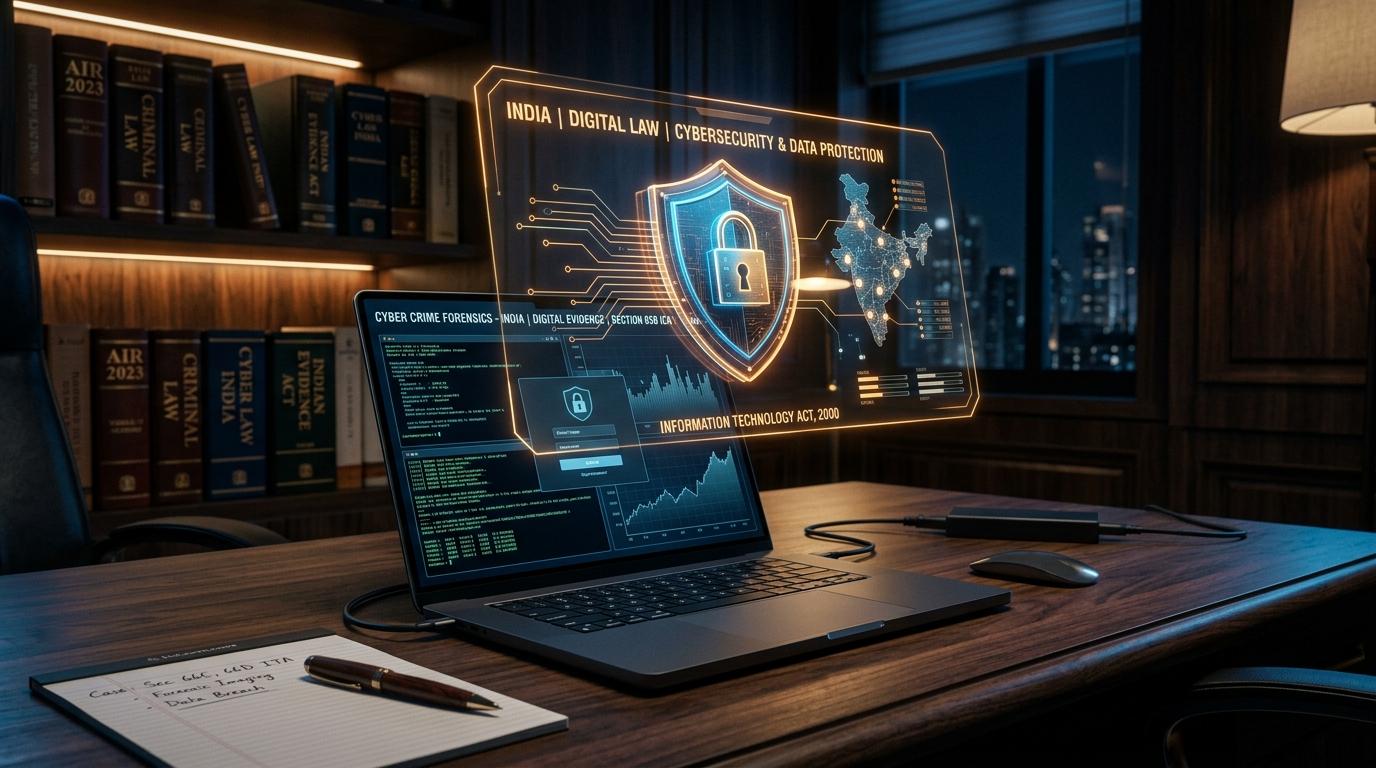
"From UPI scams and identity theft to corporate data breaches, understand your rights under the Information Technology Act, 2000, Golden Hour reporting protocols, and how to recover defrauded funds."
1. The Rising Landscape of Digital Offenses in India
With the rapid adoption of digital banking and social media, cybercrimes ranging from unauthorized UPI transfers and identity theft to AI deepfakes and ransomware extortion have surged.
The Indian legal framework primarily relies on the Information Technology Act, 2000 (as amended), alongside relevant penal sections of the Bharatiya Nyaya Sanhita (BNS) and the Digital Personal Data Protection (DPDP) Act, 2023.
2. Key Penal Sections of the Information Technology Act
Section 66C: Penalizes identity theft including unauthorized use of passwords, biometric data, or digital signatures with up to 3 years imprisonment and fines.
Section 66D: Imposes imprisonment up to 3 years for cheating by personation using a computer resource (covering phishing, fake bank calls, and lottery scams).
Section 67 & 67A: Strictly penalize transmitting sexually explicit material or non-consensual imagery online.
3. The 'Golden Hour' in Financial Fraud: Helpline 1930
If you fall victim to financial cyber fraud, report it within the first 1 to 2 hours ('The Golden Hour') by calling the National Cyber Crime Helpline: 1930.
The Indian Cyber Crime Coordination Centre (I4C) coordinates with banks and payment gateways to freeze the beneficiary account before the fraudster withdraws the money through ATMs or converts it into cryptocurrency.
4. Filing a Formal FIR & Magistrate Court Orders
Always file an official written complaint at your nearest Cyber Crime Police Station or online at cybercrime.gov.in. Preserve all transaction IDs, bank SMS, call recordings, and email headers.
If police delay investigation, our legal counsel files Section 156(3) petitions before the Judicial Magistrate to direct immediate registration of FIR and forensic device seizures.
Facing a similar legal challenge?
Consult the experienced advocates at MK Associates. Our panel represents clients in District Courts, High Courts & Supreme Court of India.
More Legal Insights · अन्य कानूनी लेख
 Criminal Law
Understanding BNS 2023: Key Changes from IPC
The Bharatiya Nyaya Sanhita (BNS) 2023 has overhauled India's penal framework. This comprehensive analysis breaks down critical modifications in bail norms, definitions of offences, community service provisions, and procedural rights.
Read in New Tab Tax Law
GST Compliance for Small Businesses: A Practical Guide
A complete legal handbook for Indian startups and MSMEs on GST registration, GSTR-1 and GSTR-3B filings, Input Tax Credit (ITC) reconciliation, and handling Section 73/74 show-cause notices.
Read in New Tab